Digital Sovereignty for Businesses: Keep Control of Your Critical Data Through Data Quality

Digital sovereignty has become a strategic priority for governments seeking to protect their digital assets from geopolitical dependencies and external threats. This shift increasingly concerns businesses as well: knowing where data is stored, how it is processed, and who can access it is now essential to maintaining autonomy, compliance, and security.
Yet sovereignty does not rely solely on infrastructure. It depends equally on an organisation’s ability to rely on accurate, unified, and trustworthy data. This is where Data Quality becomes decisive, turning raw data into a controlled, exploitable and sustainably sovereign asset.
1. Mastering Data Sovereignty at the Business Level
Corporate digital sovereignty now sits within a global environment shaped by regulatory constraints, geopolitical tensions, and operational risks. These forces directly influence an organisation’s ability to maintain control over its strategic information.
To remain sovereign, organisations must meet a dual requirement: Know precisely where their data is stored, how it is processed, and who can access it. Be able to use and retrieve this data without depending on external actors. Failing to control either dimension exposes businesses to operational vulnerabilities, regulatory sanctions, and loss of autonomy over their most valuable asset: data.
Implementing sovereign environments is therefore essential, even if this implies operational trade‑offs. But sovereignty starts with the data itself: an organisation cannot be sovereign over infrastructure if its underlying repositories are inconsistent, duplicated or unreliable. High‑quality data is the foundation on which all sovereignty strategies are built.
2. Embedding Sovereignty in Data Quality
With clean, reliable data, sovereignty becomes practical and actionable. Organisations regain control over how their data is leveraged, shared, and audited — and over all the processes that depend on it.
Controlling Processing and Decisions Through Reliable Data
Poor‑quality data distorts analysis and weakens decision‑making. In contrast, deduplication, normalisation, and verification create accurate and operational repositories without requiring external reprocessing services.
Reliable data reduces uncertainty and strengthens data‑driven operations, supporting autonomous decision‑making across all business functions.
In high‑volume sectors, Data Quality also improves performance and reduces costs. For example, in the healthcare sector, one organisation achieved a 40% reduction in storage costs by cleansing and deduplicating millions of records, all while improving data integrity and control.
Strengthening Autonomy Through Controlled Data
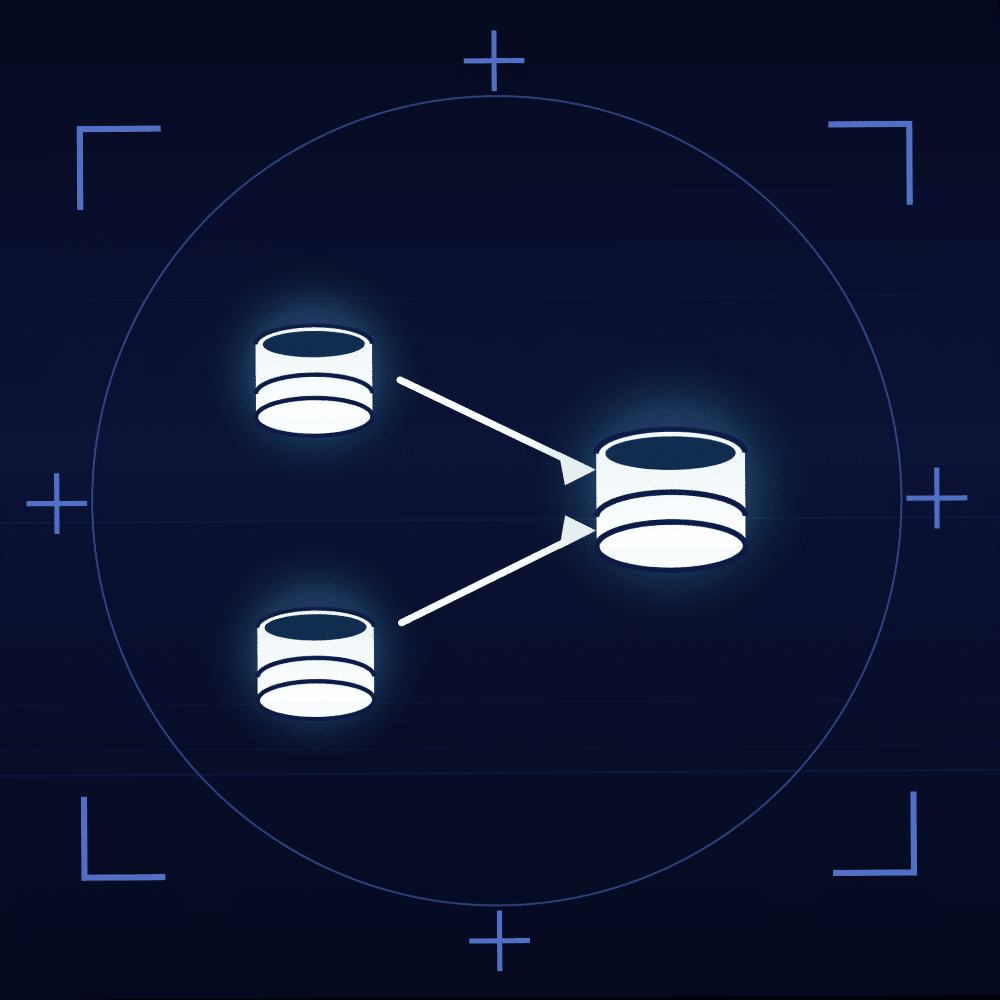
Data Quality enables the creation of a Golden Record — a unified, complete and consistent version of each entity. This significantly reduces the need for third‑party SaaS tools often used to “fix” data that is unusable in its original state.
The Golden Record can then be hosted in controlled environments, including sovereign or air‑gapped infrastructures.
A major energy provider, for instance, was able to consolidate 15 separate sources into a single sovereign data lake, maintaining full traceability for each change. This approach reduces reliance on external providers, particularly non‑European SaaS platforms, and reinforces operational autonomy.
Securing Data and Reducing Risks
Unified and accurate repositories also offer stronger security. Clean data makes anomalies easier to detect and reduces exploitable vulnerabilities.
In several banking projects, fraud risks were reduced significantly after customer databases were cleansed and consolidated into secure, certified European environments.
Data Quality also helps organisations maintain sovereignty over regulatory compliance. Standardised repositories enable each data point to be verified, traced and linked to the correct reference system. This makes audits simpler and ensures compliance is demonstrated in a transparent and verifiable manner.
3. Data Quality and Sovereignty: Making the Right Structural Choices
Not all Data Quality platforms offer the same level of sovereignty. Some create new dependencies or limit the ability to operate within controlled environments. Selecting a Data Quality provider therefore requires evaluating several sovereignty‑critical criteria.
Ensuring Control of the Ecosystem and Hosting
Organisations must be able to use their data in the environment of their choice, whether hosted in France, in Europe, or within an internal infrastructure. A Data Quality platform should therefore enable the creation of repositories that do not rely on proprietary ecosystems.
In highly sensitive sectors, the Golden Record must also remain compatible with isolated or air‑gapped environments to guarantee full autonomy and control.
Offsetting Performance and Cost Constraints
Sovereign environments often involve higher hosting costs and potential performance constraints, such as increased latency. Hyperscaler sovereign offerings exist, but they tend to be costly and sometimes limited.
A hybrid sovereign architecture is therefore the most effective model. The right Data Quality capabilities help organisations: Identify and isolate strategic data; Reduce the volume requiring sovereign treatment; Maintain sovereignty where necessary while optimising resources elsewhere.
Processing can be integrated with sovereign hyperscale environments such as Google S3NS or Microsoft Azure Bleu, ensuring that sensitive data remains sovereign while non‑critical data benefits from cloud flexibility and lower storage costs.
Benefiting from Expert Support
Sovereignty depends not only on technology but also on operational expertise. Identifying hidden dependencies, mapping data flows, assessing cloud contracts, and structuring repositories all require specialised skills.
Working with Data Quality experts ensures that repositories are built to be reliable, exploitable and sustainably sovereign, enabling organisations to maintain full control over their data both now and in the long term.
Data Quality is a foundational pillar of digital sovereignty. By ensuring reliable, unified and controlled data, organisations strengthen their autonomy, improve performance, and protect their most strategic information assets.
With the right approach, and the right Data Quality capabilities, sovereignty becomes not only achievable but a long‑term operational advantage.
Artificial Intelligence presents a paradox: it promises unprecedented data exploitation while requiring organisations to send data to models that are largely hosted outside Europe. Each API call to a third-party LLM creates a micro-leak of data. When aggregated, it becomes an “AI sovereignty debt” that is invisible in technical audits but very real in user agreements.
- Cleaned and structured data acts as a safeguard by precisely qualifying what can be sent to external AIs.
- Public data or anonymised aggregates can be exploited without significant exposure.
- Quality becomes the determining factor on whether and how AI can be used, without compromising performance or control.
Open-source Small Language Models deployable on-premise or in air-gapped environments enable “sovereign and customised” AI capabilities. Trained on high-quality data, an internal SLM expands the Golden Record beyond its formal boundaries to include semantics: entity equivalences, sentinel value detection, contextual inconsistency identification.
In contrast, a model fed with degraded data only amplifies errors. Data quality is therefore both the foundation for training the model and a permanent mechanism that ensures sovereign control.
About DQE
Because Data quality is essential to customer knowledge and the construction of a lasting relationship, since 2008, DQE has provided its clients with innovative and comprehensive solutions that facilitate the collection of reliable data.

18
Years of
expertise

1,000
Clients in all
sectors

10Bn
Queries per
year

240
Internationnal
repositories